Most of us know a guide dog when we see one. Fewer people realise that some of the working dogs out and about in Australia are hearing dogs, trained to let a person who is deaf or hard of hearing know when an important sound has happened. Hearing dogs, also called hearing assistance dogs, have been trained and placed in Australia for more than four decades. This article is a general-interest look at what these dogs are trained to do, where they come from, and how training and placement programs work, drawing on what the organisations themselves describe.
What Are Hearing Dogs?
A hearing dog is an assistance dog trained to alert a person who is deaf or hard of hearing to particular sounds. In Queensland they are named directly in state law: the Guide, Hearing and Assistance Dogs Act 2009 covers all three kinds of working dog, and the Queensland Government publishes information about it.
Unlike a pet that happens to notice the doorbell, a hearing dog is taught a specific, reliable response to specific sounds, and it works as part of a team with its handler.
What Sounds Are Hearing Dogs Trained to Alert To?
Lions Assistance Dogs, a national organisation that trains hearing assistance dogs, says each dog is trained to identify approximately ten common household sounds. The Victorian Government's Seniors Online service, describing the program, lists sounds such as a phone or alarm ringing, someone at the door, a baby crying and a smoke alarm.
The way the dog responds is worth knowing about. According to Lions Assistance Dogs, the dog locates the source of the sound, runs to its person and touches a paw to their leg, then leads them back to where the sound is coming from. A smoke alarm is handled differently. For that sound, the dog runs to its person, touches a paw to their leg and then drops to the ground as a warning signal, rather than guiding them towards the alarm.

Who Trains Hearing Dogs in Australia?
Many Australians will know the program by its long-standing name, Australian Lions Hearing Dogs. The organisation has since rebranded as Lions Assistance Dogs, and it says its first program was established in 1980. It now describes itself as a not-for-profit organisation that trains three kinds of assistance dog: hearing assistance dogs, medical assistance dogs and psychiatric assistance dogs, placed Australia-wide.
The organisation's National Training Centre is at Verdun in the Adelaide Hills of South Australia. While that centre is being redeveloped, its operations are based temporarily at nearby Hahndorf. It reports more than 700 hearing assistance dog partnerships created so far, and it states that it is an accredited member of Assistance Dogs International, an international body for assistance dog programs, with on-site evaluations by trained assessors every five years.
Lions clubs around Australia have been part of the story for decades. The organisation says it has received support from Lions clubs Australia-wide for more than 40 years, including help with post-placement support for its dogs.
Where Do Hearing Dogs Come From?
One of the more surprising parts of the story is where many of the dogs began. Lions Assistance Dogs says that until 2018, all of its assistance dogs came through its rescue dog program, adopted from pounds and shelters. The Seniors Online article notes that hearing assistance dogs come in all shapes, sizes and breeds.
In 2018 the organisation introduced a Puppy Program to add to the supply of suitable dogs as demand grew. Under that program, puppies come from a small number of breeders in South Australia and Queensland, so there is a Queensland thread running through some of these dogs' stories.
How Are Hearing Dogs Trained?
Training happens in stages. In the Puppy Program, volunteer puppy carers take on a puppy at around eight weeks old and look after it for eight to ten months, helping it get used to everyday sights, sounds and places. Lions Assistance Dogs says the dogs are then ready to come into training at around 10 to 12 months of age.
Seniors Online describes dogs aged from six months to two years taking part in an advanced training program at the organisation's training centre in the Adelaide Hills before they are ready for a new home.
Before a dog is delivered, it has to pass a Public Access Test, which checks that the dog behaves reliably and stays under its handler's control in public places.
How Does Placement Work?
A hearing dog is only part of the picture. The other part is the person, and matching the two takes time. Lions Assistance Dogs lists some basic criteria for applicants, including being over 18 years of age, having no other dogs living in the home, being able to meet the ongoing costs of caring for a dog, and being able to work with the dog in the home environment.
The organisation describes its application process and cost arrangements on its own website, and applicants are expected to meet the ongoing costs of caring for the dog.
The assessment does not stop at handover. The organisation describes an assessment for accreditation three months after the dog is delivered, and further assessments every two years after that.
Hearing Dogs Out and About in Queensland
In Queensland, the Guide, Hearing and Assistance Dogs Act 2009 applies to handlers. The Queensland Government publishes the requirements, which include passing a public access test and carrying an identity card. Anyone wanting to know their rights and responsibilities should check the Queensland Government website.
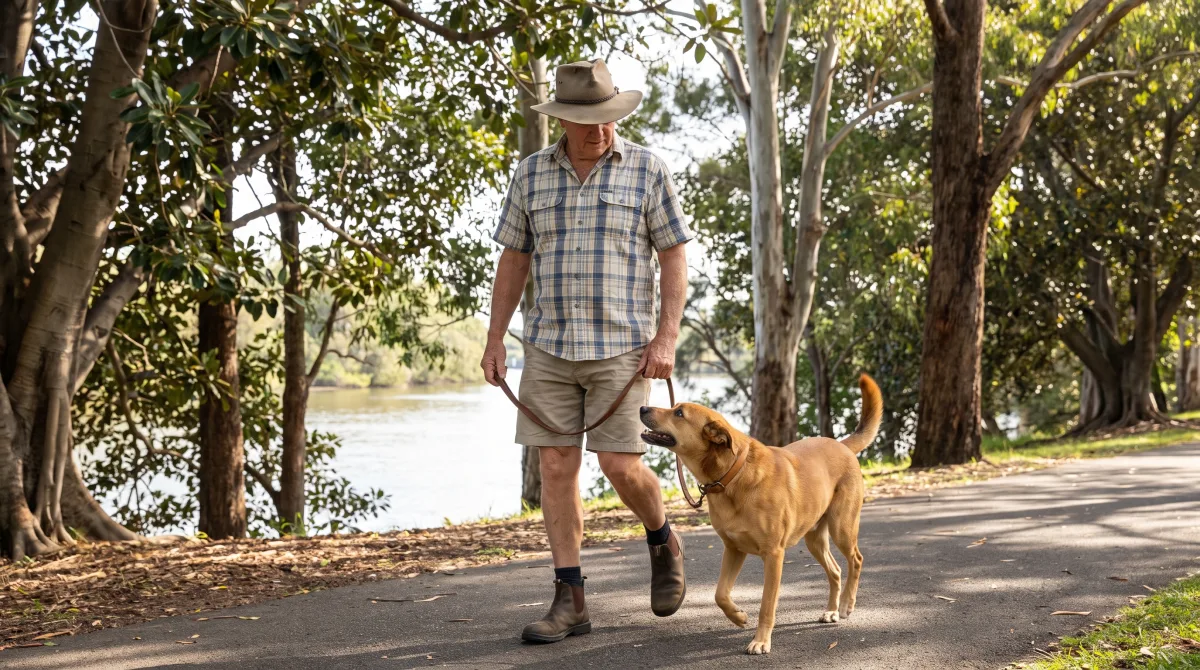
You may see a hearing dog team out and about in Rockhampton, such as at a shopping centre on a Saturday morning, a cafe near the river, on a bus into town or at a motel on the Capricorn Coast.
There is a simple bit of etiquette that goes with that. Guide Dogs Queensland asks people never to feed, pat or distract a working dog when it is in its coat or harness, to speak directly to the person rather than the dog, and to give working teams space. The same courtesy extends to hearing dogs and their handlers.
A Working Partnership Worth Knowing About
Hearing dogs are a quiet part of Australian life. Many of them started life as rescue dogs, they are trained to respond to the ordinary sounds of a household, and they work in partnership with their handler at home and out in the community. Knowing they exist, and knowing to let a working dog get on with its job, is a small piece of everyday awareness. For readers interested in the wider Deaf community, we also looked at International Week of Deaf People, and the clinic's page on assistive listening devices describes some of the technology side of hearing support.
If you'd like to chat about your hearing, the friendly team at CQ Audiology in Rockhampton is here to help. Call (07) 4848 6528 or book online.
Sources: Lions Assistance Dogs (hearing assistance dogs, history, training and placement); Victorian Government Seniors Online (sounds hearing dogs alert to, and training); Queensland Government (Guide, Hearing and Assistance Dogs Act 2009 and handler access rights); Guide Dogs Queensland (working dog etiquette).
Concerned about your hearing?
Book a comprehensive assessment with our Rockhampton clinic.
Book an Appointment