Every September, Deaf communities around the world mark International Week of Deaf People. It is a week about language, culture, identity and belonging, and it is celebrated by Deaf people themselves in cities, regional centres and small towns alike, including here in Central Queensland. This article is a general interest look at what the week is, where it came from, and why Auslan sits at the heart of it.
Where the Week Comes From
International Week of Deaf People is coordinated by the World Federation of the Deaf, the international organisation that represents national Deaf associations around the globe. The World Federation of the Deaf describes the week as an annual observance held in September, in the week containing 23 September, and each year it publishes a theme along with materials that national member organisations adapt for their own communities. In 2026 the week runs from 21 to 27 September, the theme is "Declaring Deaf People's Human Rights", and the year also marks the 75th anniversary of the World Federation of the Deaf, which was founded in 1951.
The emphasis of the week, as the World Federation of the Deaf frames it, is on Deaf people speaking for themselves. It is a celebration of Deaf communities and their languages, and a moment when Deaf organisations raise awareness of the things their members care about, such as recognition of national sign languages, access to information in sign language, and the right of Deaf children to grow up with a sign language from the start.
The International Day of Sign Languages, 23 September
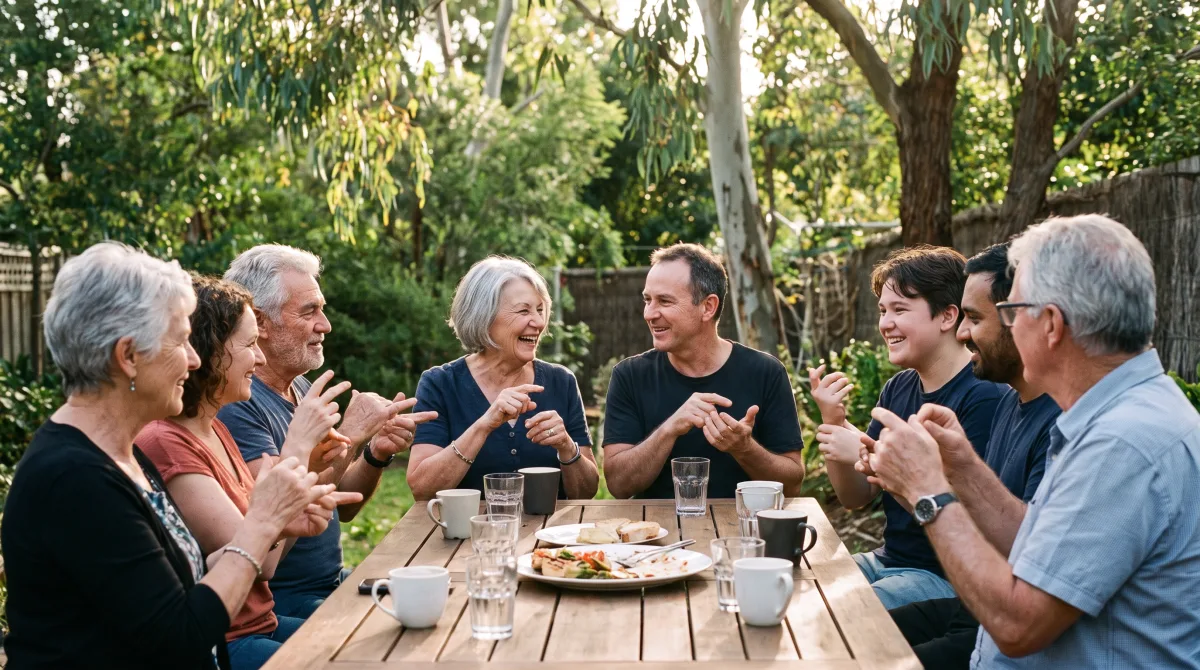
Sitting inside that week is the International Day of Sign Languages, observed on 23 September. According to the United Nations, the day was established by General Assembly resolution A/RES/72/161, adopted in December 2017, and is dedicated to raising awareness of sign languages and their importance to the human rights of Deaf people. The United Nations notes that the date was chosen because it marks the founding of the World Federation of the Deaf.
One of the ideas the United Nations returns to on the day is that sign languages are fully fledged natural languages, structurally distinct from the spoken languages around them. That point matters, and it is worth sitting with for a moment.
Auslan Is a Language of Its Own
Auslan is Australian Sign Language, the language of the Australian Deaf community. It is not English on the hands, and it is not a code for spelling out English words. Auslan has its own vocabulary, its own grammar and its own way of organising meaning, using handshape, movement, the space in front of the signer, facial expression and body position to carry information that English carries through word order and intonation.
Because it is a distinct language, Auslan also has its own regional variation, its own history and its own idioms. Signers from northern and southern parts of the country do not always use identical signs, in much the same way that spoken languages vary from region to region. Deaf Australia, the national peak body representing Deaf people who use Auslan, advocates for the language and for Deaf people's access to it across Australian life.
Auslan is used at home by thousands of Australians. The Australian Bureau of Statistics collects information on languages used at home through the Census, and Auslan appears in that data as a recorded language, which is one of the more concrete ways the language shows up in the national picture. The 2021 Census recorded around 16,200 people using Auslan at home, though 2021 was also the first Census to prompt Auslan explicitly and to ask which language people use rather than speak, so the higher count partly reflects that change in the question.
Deaf Culture and Community Life
Alongside the language sits a culture. Deaf community life in Australia has its own history, humour, storytelling traditions, sport, theatre and visual arts, and its own long running institutions such as Deaf clubs and state associations. Deaf Connect, which describes itself as the largest, whole-of-life service provider and social impact organisation for Deaf, deafblind and hard of hearing Australians, works across Queensland and delivers Auslan education, interpreting and community programs.
Deaf identity is often written with a capital D when the subject is that culture and community, as distinct from the small d used in the audiological sense. The distinction is a useful one, and it is worth knowing when reading anything about the week.
Marking the Week in Central Queensland
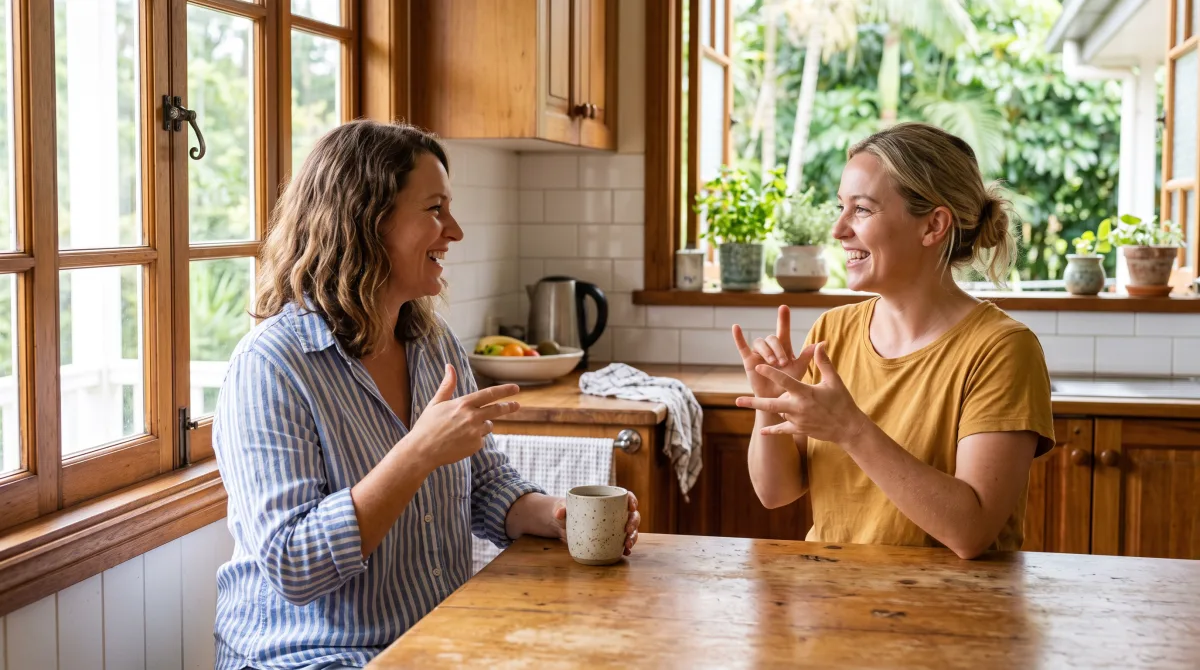
In a regional centre like Rockhampton, awareness weeks tend to be marked in quieter, more local ways than in the capital cities. Libraries and community groups sometimes run visual displays or storytelling sessions, schools with Deaf or hard of hearing students often use the week as a talking point, and organisations that work in the region may post about the theme for the year.
Access in the region also rests on interpreters. Auslan interpreters working in Australia are credentialled under the NAATI Certification System, run by the National Accreditation Authority for Translators and Interpreters as the national standards and certifying body, which issues credentials such as Certified Provisional Interpreter and Certified Interpreter. Interpreting services in Queensland are provided through organisations including Deaf Connect. Interpreters and live captioning are what make many public events and performances open to Auslan users, in Rockhampton, Yeppoon and the wider Capricornia region as much as anywhere else. The national Deaf organisations publish the year's theme and any events being run around the country.
Why It Is Worth Knowing About
International Week of Deaf People is, at its centre, a celebration. It is a week in which Deaf communities mark their languages and their history on their own terms, and in which everyone else gets the chance to learn something about a language that has been part of Australian life for a very long time. Noticing the week, and knowing that Auslan is a real and complete language with a community of speakers behind it, is a small thing that makes the wider world a little more welcoming.
If you'd like to chat about your hearing, the friendly team at CQ Audiology in Rockhampton is here to help. Call (07) 4848 6528 or book online.
Sources: World Federation of the Deaf (International Week of Deaf People, organisation history and themes); United Nations (International Day of Sign Languages, 23 September); Deaf Australia (national peak body for Auslan users); Deaf Connect (Auslan education, interpreting and community services in Queensland); Australian Bureau of Statistics (Census data on languages used at home, including Auslan); National Accreditation Authority for Translators and Interpreters (the NAATI Certification System and interpreter credentials).
Concerned about your hearing?
Book a comprehensive assessment with our Rockhampton clinic.
Book an Appointment