

What is Tinnitus?
Tinnitus is a condition characterised by the perception of noise or ringing in the ears when no external sound is present. It is a common problem that can occur in one or both ears. Tinnitus is not itself a disease. Your GP or an audiologist can talk through possible reasons for it.
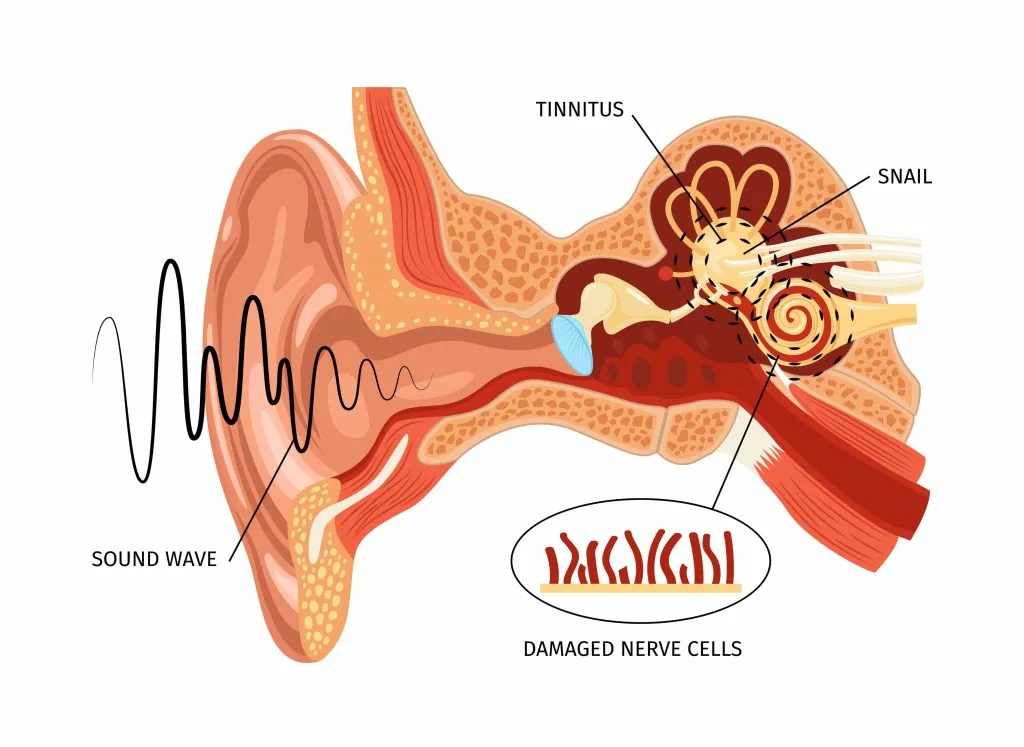
Types of Tinnitus
Subjective Tinnitus
This is the most common type, where only the person experiencing it can hear the noise. It can be caused by ear problems in the outer, middle, or inner ear, as well as by issues with the auditory nerves or the part of the brain that interprets nerve signals as sound (auditory pathways).
Objective Tinnitus
This is a rare type of tinnitus that a doctor can hear during an examination. It may be caused by an inner ear bone condition or muscle contractions.
Causes of Tinnitus
Age-related hearing loss
Age-related hearing loss or exposure to loud noise can damage the hair cells in the cochlea of the inner ear, which may lead to tinnitus.
Exposure to loud noise
Exposure to loud noise is one of the most common causes of tinnitus and also one of the main causes of hearing loss.
Earwax blockage
Excessive buildup of earwax can block the ear canal and cause hearing loss or irritation of the eardrum, which might lead to tinnitus. Earwax blockages should always be assessed and removed by a professional, such as a GP or audiologist, rather than treated at home. Do not attempt to remove earwax yourself with cotton buds or other objects, as this can push wax further in and damage the ear.
Head or Neck Injuries
Trauma to the head or neck can affect the inner ear, hearing nerves, or brain function linked to hearing. Such injuries can result in tinnitus.
Meniere's Disease
This disease affects the inner ear and is characterised by tinnitus, vertigo, and hearing loss.
Managing Tinnitus
Tinnitus can be challenging to manage. There are several strategies that may help, and your audiologist or GP can talk through which may suit you.
Hearing Aids
For individuals with hearing loss, hearing aids can amplify external sounds, which may help mask tinnitus and make it less noticeable.
Sound Therapy
This involves using external noises to partially drown out or distract from the tinnitus. Sound therapy can include:
- White Noise Machines
- Masking Devices
- Notched Music Therapy
Cognitive Behavioural Therapy (CBT)
CBT is a type of psychotherapy that may help people manage their tinnitus by changing the way they think about and respond to their condition. It can help reduce stress and anxiety related to tinnitus.
Tinnitus Retraining Therapy (TRT)
TRT combines sound therapy with a teaching and counselling program to help people become less aware of their tinnitus. It aims to help the brain treat the tinnitus noises as normal background sounds.
Medical advice
Your GP or an ENT specialist will advise on any medical management.
Your Management Plan
Speak with your audiologist or GP about a management plan suited to you.