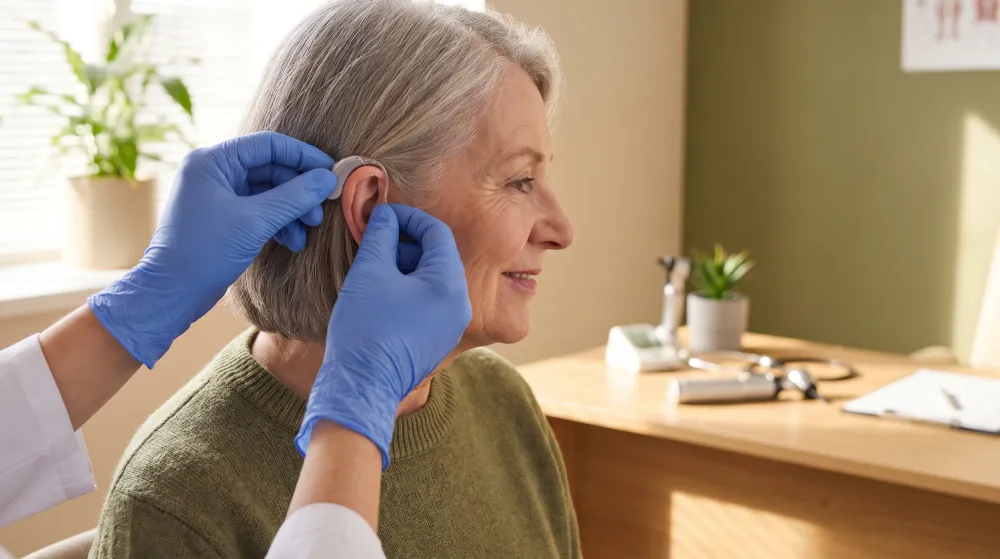
Hearing aids are small computers programmed to your own hearing levels, so how they are fitted matters as much as which ones you pick. At CQ Audiology we fit, program, service and adjust hearing aids in Rockhampton, from our rooms at City Centre Plaza on Fitzroy Street. When something needs tweaking, you come back down the road rather than posting your aids away.
Which hearing aid styles are available?
Four broad styles cover most people. Which one suits comes down to your ears and your daily routine, not to which model looks newest. There is more in our guide to the different types of hearing aids.
- Behind the ear (BTE). The body sits behind your ear with a tube or slim wire into the canal. Roomy controls, easy to handle, suits a wide range of hearing levels.
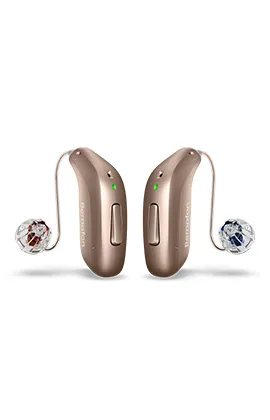
- Receiver in canal (RIC). Similar but slimmer, with the speaker down in the ear canal. Discreet, light and very common.
- In the ear (ITE). Built into a custom shell moulded from an impression of your ear. Nothing sits behind the ear, and the larger size is easier to grip.
- Completely in canal (CIC). The smallest option, sitting deep in the canal. Barely visible, though it does ask for steady fingers.
Within those styles you can choose rechargeable models that sit in a charger overnight, or replaceable batteries. Most current devices also stream sound from a mobile phone or a television straight into the aids over Bluetooth, which helps if phone calls are your hardest listening situation.
How do we work out which hearing aid suits you?
The choice comes out of your assessment results plus a proper conversation about your week. We take our time here, because a device that does not fit your life ends up in a drawer. Our hearing aid solutions page covers the range.
- Your hearing levels. Some smaller styles cannot deliver enough sound where hearing loss is more significant.
- Ear canal shape and wax. Narrow canals, or canals that produce plenty of wax, rule some options out.
- Hands and eyesight. If fiddly things are hard work, a larger body or a rechargeable model saves daily frustration.
- Where you struggle. A quiet home is a different problem from a busy club or a church hall.
- Phone and television use. Streaming may matter enormously, or not at all.
- Budget and funding. We set out what is available before you commit to anything. Conditions apply under the Australian Government Hearing Services Program.
What happens at a hearing aid fitting?
The fitting appointment is where a device becomes yours. Allow roughly an hour, and bring someone whose voice you hear often.
- We program the aids to your own hearing levels, using your assessment results as the prescription.
- We check the physical fit, so the dome or mould sits comfortably and does not whistle.
- We fine tune while you listen to real speech, then adjust again based on what you tell us.
- We show you how to put them in and take them out, clean them, charge or change batteries, and pair them with your phone.
- We write the important parts down, so you are not relying on memory at home.
The first few weeks
Sounds you have not heard clearly for a while all arrive at once. Your own footsteps, the kettle, the indicator in the car. That is normal, and most people settle in over a few weeks. Start at home where it is quiet, build your wearing hours up gradually, and jot down the moments that were hard. That short list is what we work from at your first review.

Follow-up, adjustments and repairs
This is the part that matters most, and it never really stops. Ongoing care covers:
- Review appointments to adjust the programming once you have worn the aids in everyday situations.
- Domes, tubes and wax filters replaced, since these are consumables and block up over time.
- Cleaning and servicing, keeping moisture and wax out of the works.
- Repairs, handled in the clinic or sent back to the manufacturer under warranty.
- Re-testing as the years pass, because hearing changes and the programming should change with it.
How can hearing aids be paid for?
There are a few pathways, and we will tell you which apply before anything is ordered. Eligible pensioner concession card and DVA card holders may access services under the Australian Government Hearing Services Program; eligibility criteria apply. Our Hearing Services Program page explains that pathway. Conditions apply under the Australian Government Hearing Services Program.
Where the program does not apply, hearing aids are purchased privately. Some private health funds pay a benefit towards them, so ring your fund and ask what your level of cover includes. If your hearing loss is connected to noise at work, ask us about industrial deafness assessments, which follow a separate process again.
Why local aftercare matters out here
Central Queensland is a long way between towns. A hearing aid bought a plane trip away is fine right up until a wax filter blocks on a Tuesday morning. Being fitted locally makes adjustments, cleans and quick fixes a short trip instead of a day off work. We also run visiting clinics at Yeppoon, Emerald, Biloela, Blackwater, Blackall, Barcaldine, Longreach, Tambo and Mount Morgan, listed on our locations page.
Home visits can be arranged where travelling in is difficult, which often suits residents in aged care or anyone who no longer drives.
Looking after your hearing aids at home
- Wipe them over with a dry cloth at the end of each day.
- Keep them out of the bathroom, and never wear them in the shower or the pool.
- Store them somewhere dry with the battery door open, or in the charger overnight.
- Keep them away from hairspray, heat and the dashboard of a hot car.
- Keep batteries and aids out of reach of grandchildren and pets.
If you are weighing up hearing aids in Rockhampton, start with a chat rather than a catalogue. Call CQ Audiology on (07) 4848 6528, email reception@cqaudiology.com.au, or fill in the booking form and we will find you a time, weekdays or Saturday morning.