
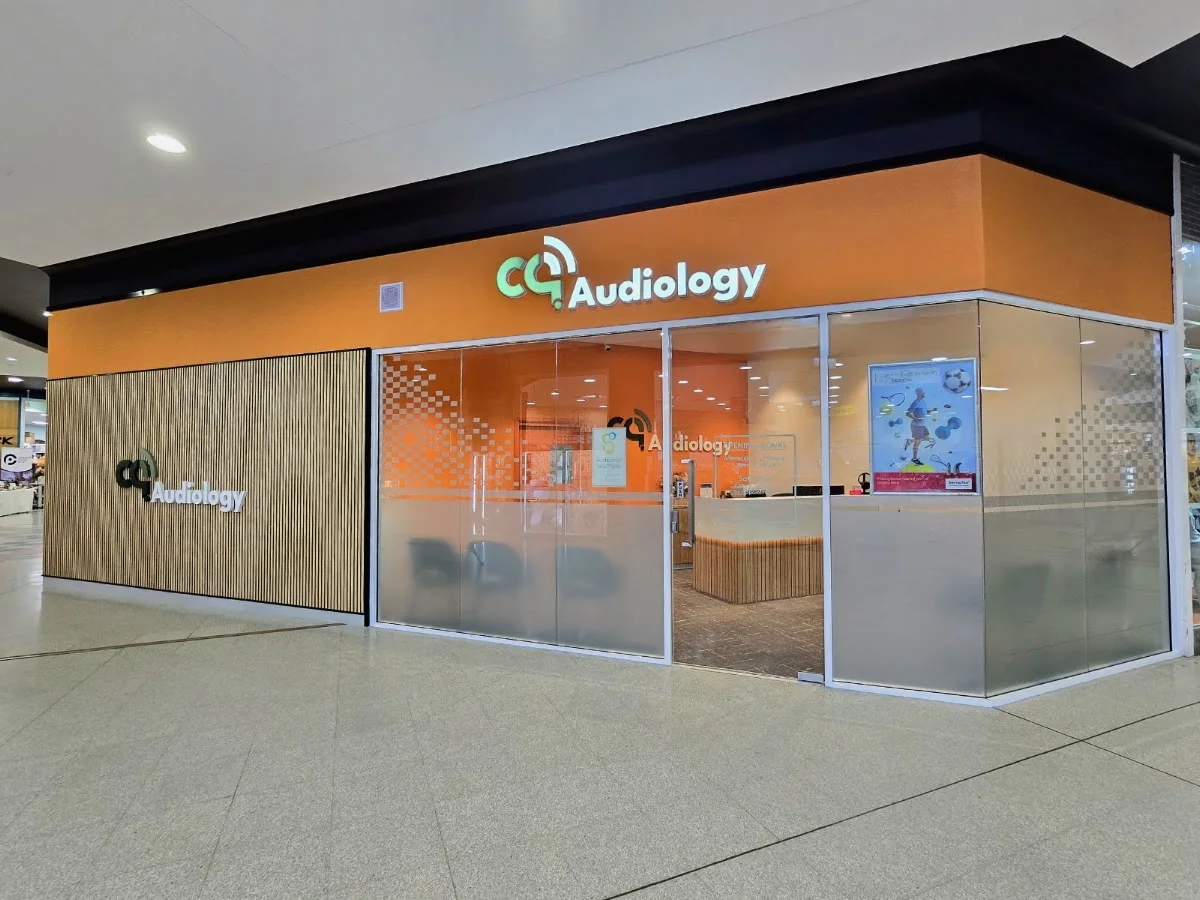
An audiologist is a university qualified hearing health professional who tests hearing, works out what is behind a hearing difficulty, and helps you manage it. At CQ Audiology in Rockhampton, your appointment is with Rajesh Geddada, a qualified audiologist. The clinic sits inside City Centre Plaza on Fitzroy Street, with parking and lift access on site.
What does an audiologist do?
An audiologist works with hearing and with the ear itself. That covers measuring how well you hear, explaining what those measurements mean in everyday terms, and helping you decide what to do next. Part of the job is technical, such as finding the softest sound you can detect at each pitch. Much of it is practical, such as working out which conversations you keep missing at home, and why.
At CQ Audiology, the person who tests your hearing is the same person who talks you through the options, fits any device you choose, and sees you again for reviews. You are not passed between departments, and you are not starting your story over each visit.

What does it take to become an audiologist in Australia?
Standards for the profession are set and maintained by professional bodies such as Audiology Australia. An audiologist typically completes an undergraduate degree first, then an accredited master's level qualification in audiology that includes supervised clinical placements with real patients. Members of these professional bodies are expected to keep up structured, ongoing learning every year, because devices, testing methods and evidence all keep moving.
Rajesh Geddada is a qualified audiologist and hearing care professional, and he maintains ongoing professional development so his practice keeps pace with current evidence and current technology.
Audiologist or audiometrist, what is the difference?
Both work in hearing care, and both can help a great many people. The difference sits in the training pathway and in the scope of practice that follows from it. An audiologist's postgraduate training covers a wider range of diagnostic work, including assessment related to cochlear implants and more complicated or unusual results. If you want the plain English version, we have set it out in our audiologist vs audiometrist explainer.
Why does this matter when you choose where to go?
Most people book a hearing appointment once, then stay with that clinic for years. It is worth a few minutes of thought up front. Four things tend to matter:
- Scope. Unusual results, one sided hearing loss or a complicated ear history need someone who can investigate further, not just move on to a device.
- Continuity. Seeing the same clinician means your history, your ear shape and your hardest listening situations are already known.
- Independence. CQ Audiology is independent and family run, so what gets recommended comes from your ears and your circumstances.
- Distance. Central Queensland is spread out. A clinician you can get back to easily is worth a great deal when something needs adjusting.
What happens at your first appointment?
Your first visit is as much a conversation as a test. Set aside about an hour. This is the usual shape of a diagnostic hearing assessment with us.
- We talk first. When you noticed the change, which situations are hardest, noise exposure at work, any ringing in the ears, family history and past ear problems.
- We look inside both ears with a small light and camera, checking the ear canal and the eardrum.
- If wax is blocking the view, we discuss micro-suction ear wax removal before testing, because wax on its own can change the results.
- You listen to tones at different pitches through headphones and respond when you hear them, even faintly.
- We check how well you make out speech, since following words matters far more day to day than hearing beeps.
- We test how the eardrum and middle ear are working, which tells us where in the ear the difficulty sits.
How your results are explained
Results are explained during the appointment, not posted out weeks later. We show you the chart, point out which sounds sit inside your hearing range and which fall outside it, and put that into ordinary language, such as why women's and children's voices can be harder to follow than a man's. If your partner or an adult child comes along, they hear the same explanation. Our guide to what happens at a hearing test walks through each step.
Then we talk about what comes next. For some people that is nothing at all right now, with a review in twelve months to see whether anything has shifted. For others it is communication strategies the whole household can use. For others again it is a device. If anything in the results points to a medical cause, we will say so plainly and suggest you speak with your GP.
What else the clinic handles
Beyond the standard assessment, appointments cover tinnitus assessment and management, cochlear implant assessment, custom earplugs for work, swimming or sleeping, assistive listening devices, and communication strategies for couples and families. We also carry out pre-employment hearing assessments and industrial deafness assessments for local employers and workers. Home visits can be arranged where getting into the clinic is difficult.
Visiting us in Rockhampton
You will find us at T33 and 34A, City Centre Plaza, 24 Fitzroy Street, Rockhampton QLD 4700. City Centre Plaza is right in the middle of town, with on site parking and lift access, so there are no stairs to manage and no long walk from the car. We are open Monday to Friday, 9:00am to 5:00pm, and Saturday mornings, 9:00am to 12:00pm. We are closed Sunday.
If you have been turning the television up, or the family has been asking you to, book a time with our audiologist. Call (07) 4848 6528, email reception@cqaudiology.com.au, or use the online booking form and we will confirm an appointment that suits you.