Scroll an online marketplace or wander down an electronics aisle and you will come across products described as hearing amplifiers. Elsewhere, in a very different setting, you will come across hearing aids. The two terms sound alike, and a common question is what actually separates them. This article is a neutral, factual look at how these two product categories are described in Australia. It sets out what each category is, and it does not suggest which one anybody should consider.
Two Terms That Sound Similar
"Hearing amplifier" and "personal sound amplifier" are names used in the consumer market for devices that make sound louder in a general way. "Hearing aid" is the term used for a product that Australian regulation treats as a medical device. The words blur together in everyday conversation because both describe something worn on or near the ear that involves sound and electronics. In regulatory terms, though, they sit in separate categories, and the line between them is drawn by what a product is intended to do rather than by what it looks like.
Intended Purpose Is What Defines the Category
Australia's Therapeutic Goods Administration, known as the TGA, is the body that regulates medical devices. The TGA explains that whether something counts as a medical device depends on its intended purpose, meaning what the manufacturer states the product is for. A product intended to compensate for a hearing impairment falls inside the medical device framework. A product presented simply as general sound amplification, without that stated purpose, is generally handled as ordinary consumer electronics instead.
What That Means for Hearing Aids
Because hearing aids are intended to compensate for hearing loss, they sit within Australia's medical device system. In practice, that means a hearing aid is generally entered in the Australian Register of Therapeutic Goods before it can be supplied here, and the manufacturer carries the obligations the TGA sets for devices in that register. Hearing Australia describes hearing aids as devices commonly fitted and adjusted by a qualified professional based on a person's individual hearing profile. Audiology Australia, the professional body for audiologists, describes hearing assessment and device fitting as part of the work its members carry out. These are descriptions of how the category is organised, not statements about outcomes for any individual.
What That Means for Amplifiers
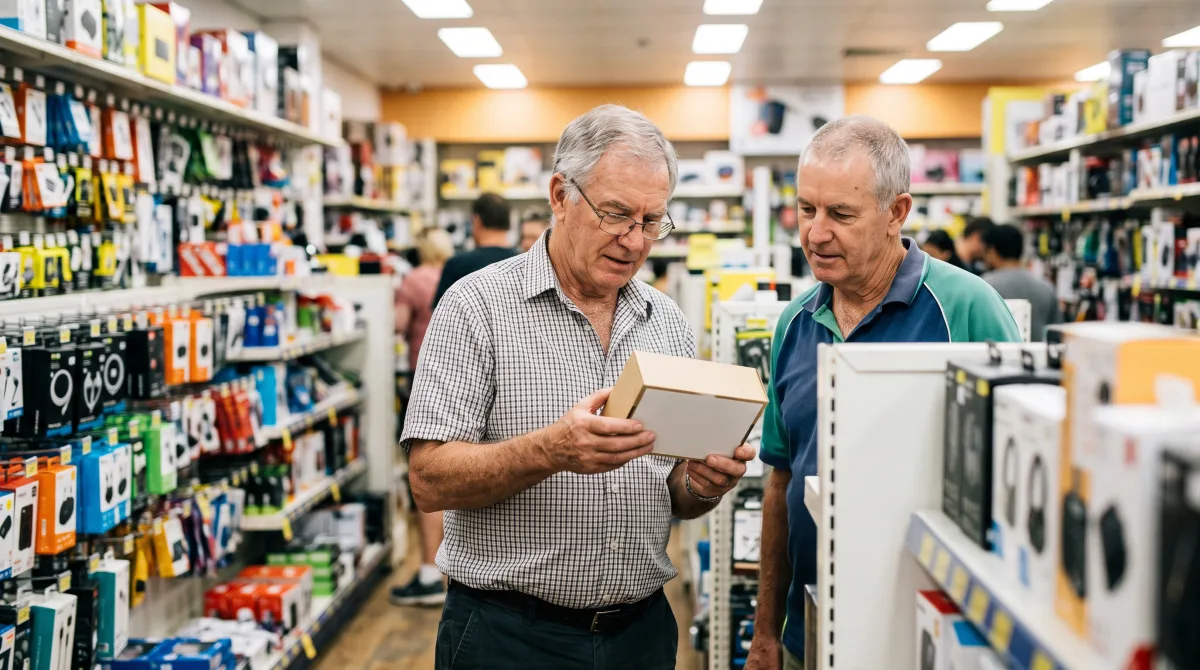
Personal sound amplifiers are sold as consumer products. They are typically bought directly off a shelf or a website, without a fitting appointment, and the volume and settings are usually adjusted by the person using them rather than programmed to a measured hearing profile. Sitting outside the therapeutic goods framework does not mean sitting outside the law. Australian Consumer Law still applies, and the ACCC, which enforces it, says businesses must not make claims that are false or misleading. Marketing in either category has to reflect what the product genuinely does.
Why the Wording on the Box Matters
Because the categories are defined by intended purpose, the language a seller uses is part of what places a product on one side of the line or the other. That is why packaging and product listings can be worded so carefully. Some products describe themselves in terms of amplifying sound in particular situations, such as birdwatching. Others state a purpose that relates to hearing loss. Two devices can look broadly similar in a photograph and still be described in quite different terms, and those words are doing regulatory work rather than just marketing work, though it is the TGA that assesses how a product is presented overall, not the seller's label alone. Consumer earbuds have made that wording question more visible again, and we looked at one example of it in using AirPods as hearing aids.

How Each One Reaches the Buyer
The two categories also tend to travel different routes to the person holding them. Consumer amplifiers are generally a retail purchase, ordered online or picked up in a shop, and are ready to use out of the box. Hearing aids in Australia are generally supplied through a clinic pathway that involves a hearing assessment and a fitting appointment with a qualified professional. There is also a public element to that pathway. Eligible pensioner concession card and DVA card holders may access services under the Australian Government's Hearing Services Program, with devices supplied from the program's fully subsidised and partially subsidised device schedules; eligibility criteria apply. Conditions apply under the Australian Government Hearing Services Program. Again, this is a description of how supply is arranged, not a comment on what anybody should do.
Categories, Not Rankings
The useful takeaway is simply that these are two different things wearing similar-sounding names. One is a consumer electronics product for general amplification. The other is a category that Australian regulation treats as a medical device, with a register, manufacturer obligations and a professional fitting pathway attached. Understanding that distinction makes packaging much easier to read.
Which category is relevant to any particular person is not something an article can answer, because that depends on individual circumstances and is a conversation for a qualified professional. What we can offer here is the plain-English version of how the categories are defined, so the terminology makes sense the next time you see it.
If you'd like to chat about your hearing, the friendly team at CQ Audiology in Rockhampton is here to help. Call (07) 4848 6528 or book online.
Sources: Therapeutic Goods Administration (medical devices, intended purpose and the Australian Register of Therapeutic Goods); Hearing Australia (fitting and adjustment of hearing aids); Audiology Australia (the role of audiologists); Australian Competition and Consumer Commission (false or misleading claims under Australian Consumer Law); Australian Government Hearing Services Program (eligibility and device supply).
Concerned about your hearing?
Book a comprehensive assessment with our Rockhampton clinic.
Book an Appointment